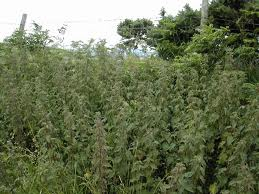
Nettles weed of the week health properties and research

Nutritional content

Nettles contain vitamin A, vitamin B1 (thiamine), B2 (riboflavin), B3 (niacin), B5 (panothenic acid), vitamin C, vitamin D, vitamin K, vitamin E. chlorophyll, potassium, calcium, mangaan, acetycholine, serotonine, sulphur, iron, selenium, magnesium, chromium and zinc.

Nicholas Culpepper, in his classic work Complete Herbal and English Physician says that Mars governs nettles. ” You know Mars is hot and dry, and you know as well that winter is cold and moist; then you may know as well the reason nettle-tops, eaten in the spring, consumeth the phlegmatic superfluities in the body of man, that the coldness and moistness that winter hath left behind.”
Medical uses
Arthritic joints were traditionally treated by whipping the joint with a branch of stinging nettles. The theory was that it stimulated the immune system and thus reduced swelling and pain in the joint. Various studies support the effectiveness of this treatment ( Randall et al., 2000; Chrubasik et al., 1997).
Various types of Nettle have been studied for their effects on prostate hypertrophy, diabetes mellitus, rheumatic disease, hypertension, gastrointestinal symptoms, osteoarthritis, diarrhea, rheumatoid arthritis, inflammation, pain (Gülçin et al., 2003; Marrassini, et al ., 2010), constipation, gastrointestinal disease, headache, nausea, common cold, arthritis, asthma, bleeding, respiratory tract disease, allergic rhinitis, kidney disease, prostate cancer, skin disease and urinary tract disease. In terms of allergies, nettle contains properties of an antihistamine to be used for treating reactions associated with the respiratory system.
Medical research
In clinical trials Urtica dioica has been tested for its benefits in the treatment of Benign Prostatic Hyperplasia (BHP), a condition that affects elderly men. It is a non-cancerous enlargement of the prostrate gland. This gradually narrows the uretha that drains the urine from the bladder and causes difficulty in urination. This can also cause lower urinary tract symptoms.

In clinical trials held at the University of Medical Sciences in Iran, Urtica dioica has been shown to lessen the symptoms of BHP. In a 6 month trail 81% of the 287 patients suffering with BHP and using nettle, had noticed an improvement of their symptoms of lower urinary tract, compared to 16% of the 271 patients taking a placebo. A modest reduction in the size of the prostrate was also noticed in the patients taking the roots of Urtica dioica. (PubMed 2005).

Further clinical trials held in the University Clinics of Cologne in Germany, for patients suffering from Lower Urinary Tract Symptoms (LUTS), caused by BHP proved to have a higher success rate of 34% for those taking the roots of Urtica dioica compared with the patients who took Tamsulosin (an alpha blocker) medication.

In 1999 at the Plymouth postgraduate Medical School, University of Plymouth in Devon, an exploratory study of nettles Urtica dioica for musculoskeletal pain and discomfort was conducted by Dr. Colin Randall. The trial was conducted on 18 patients whose ages were between 48 and 82 and who had already used nettle for the varied pain and limited function in the knees, shoulders, wrists, finger, back thumb, hips or sciatica. 15 of the 18 patients claimed nettle treatment worked about 90% of the time. The pain relief was normally quick to act and one patient claimed her psoriasis on her elbows had also improved. No serious side effects were found from nettle use other than the red rash normally caused by the nettle sting. The results found were interesting and led Dr. Randall to study nettle use further.

In 2000, he conducted a randomised controlled double blind study of nettle Urtica dioica in the use for people who suffer from osteoarthritic pain in the base of the thumb or index finger. The stings of nettle leaves were applied to the base of the thumb or finger for one week. 27 patients took part on this occasion. 13 patients used stinging nettle Urtica dioica while 14 used White Dead Nettle Labium album as a placibo. Researchers found that nettle stings significantly reduced the pain of osteoarthritis in the thumb and index finger and also the level of pain stayed lower throughout most of the treatment. 17 patients said they wished to use stinging nettle in the future. Recently research has demonstrated that the (N-acetylglucosamine)n-specific plant lectin from Urtica dioica is a potent and selective inhibitor of human immunodeficiency virus and cytomegalovirus replication in vitro.
Akbay et al., 3002 isolated the major flavonoid compounds from the methanolic extract of the aerial parts of Urtica dioica L. Their immunomodulatory activities were studied in vitro by chemotaxi. the total flavonoid fraction were determined to have significant chemotactic effects According to the results all flavonoid glycosides showed high intracellular killing activity. The results of both assays confirmed the immunostimulatory activity of the flavonoid fraction and the isolated flavonoid glycosides on neutrophils suggesting that they could possibly be useful for treating patients suffering from neutrophil function deficiency and chronic granulomatous diseases.


Tall nettles cover up, as they have done
These many springs, the rusty harrow, the plough
Long worn out, and the roller made of stone:
Only the elm butt tops the nettle now.
This corner of the farmyard I like most
As well as any bloom upon a flower
I like the dust on the nettles, never lost
Except to prove the sweetness of a shower.

Poem by Edward Thomas 1878 – 1917


REFERENCES
Akbay, P., Basaran, A. A., Undeger, U. and Basaran, N. (2003), In vitro immunomodulatory activity of flavonoid glycosides from Urtica dioica L. Phytother. Res., 17: 34–37. doi: 10.1002/ptr.1068
• Jan Balzarinia,Johan Neytsa,Dominique Scholsa,Mitsuaki Hosoyac, Els Van Dammeb, Willy Peumansb, Erik De Clercq Helleborine and the (N-acetylglucosamine)n-specific plant lectin from Urtica dioica are potent and selective inhibitors of human immunodeficiency virus and cytomegalovirus replication in vitro
http://dx.doi.org/10.1016/0166-3542(92)90038-7, How to Cite or Link Using DOI

Click to access RefPlants_20.pdf

Chrubasik S, Enderlein W, Bauer R, Grabner W. (1997). Evidence for the antirheumatic effectiveness of herba urticae dioicae in acute arthritis: A pilot study. Phytomedicine 4: 105-108.
David 1991 Insects on Nettles Naturalists Handbook Richmond Publishing Co Slough England
˙Ilhami Gülçin a, Ö. ˙Irfan Küfrevioˇglu a,∗, Münir Oktay b, Mehmet Emin Büyükokuroˇglu c 2004 Antioxidant, antimicrobial, antiulcer and analgesic activities of nettle (Urtica dioica L.) Journal of Ethnopharmacology 90 (2004) 205–215

Mabey Richard 2010 Weeds Profile Books London
Mabey Richard 1977 Plants With A Purpose Collins London
Mabey Richard 2007 Food for Free Collins London
Marrassini, C.; Acevedo, C.; Miño, J.; Ferraro, G.; Gorzalczany, S. (2010). “Evaluation of antinociceptive, antinflammatory activities and phytochemical analysis of aerial parts of Urtica urens L.”. Phytother Res 24 (12): 1807–1812. doi:10.1002/ptr.3188
Randall C, Randall H, Dobbs F, Hutton C, Sanders H (2000 Jun), “Randomized controlled trial of nettle sting for treatment of base-of-thumb pain”, Journal of the Royal Society of Medicine 93 (6): 305–309, PMC 1298033, PMID 10911825
Salisbury Edwards 1961 Weeds and Aliens New Naturalist Collins London
Weed of the Week Nettles The Ecology of Nettles

 ECOLOGY OF STINGING NETTLES

Urtica dioica the stinging nettles with its stems and leaves densely   covered with stinging hairs, which release potential pain-inducing toxins   when brushing contact is made with them, is rarely eaten by rabbits. However nettle seeds have been found in cow dung so are eaten by cattle. Nettles have a higher nutritional value than the fodder crops amongst which they thrive. Nettles contain 5 times the copper and 1.5 times the iron content of fodder grasses   and when dried may be consumed by cattle without ill effects. They are palatable   to some species of snail (Salisbury 1961). The stings offer little defence against caterpillars. Up to 31 species of Lepidoptera butterflies and moths   feed on stinging nettles, of which the adults of 4 species and 31 larvae feed   (Davis 1991).

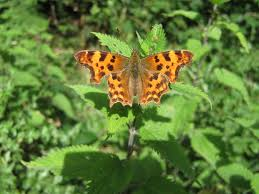
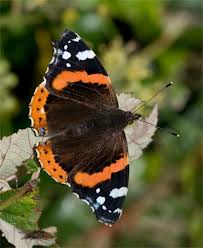
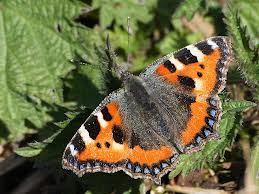
Urtica dioica is the food plant of the larvae of a  number of attractive butterflies and other phytophagous insects. Nettles are home to a lot of butterflies like the   Red Admiral Vanessa atalanta, Small Tortoiseshell Aglais urticae,   Peacock butterfly Inchis io and the Comma butterfly Polygonia   c-album. They use the nettle to lay their eggs on and when the larva   hatch they feed on the nettles.

Red Admiral Vanessa atalanta

                                                                           red admiral butterfly on nettles

Small Tortoiseshell Aglais urticae

          small tortoiseshell butterfly on nettles

Peacock butterfly Inchis io

peacock butterfly on nettles


Comma butterfly Polygonia c-album.

comma butterfly on nettles

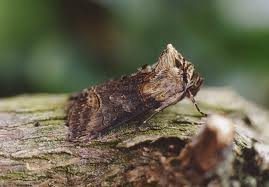
Some moths also use the nettle patch to lay their eggs or feed, they include   the Burnished Brass moth Diachrysia chrysitis,

burnished brass moth

Snout Hypena proboscidalis, on   left and

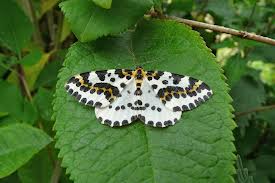
small magpie moth

Small Magpie Moth Pleuroptya   ruralis, 

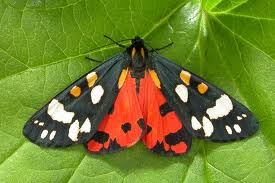
        Cream spot tiger Arctica   villica, and Scarlet Tiger Callimorpha  claminula, in the picture

scarlet tiger


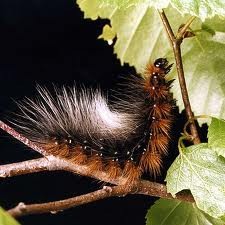
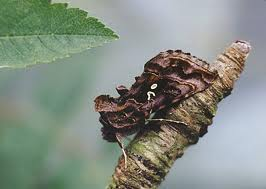
Garden tiger caterpillar Arctica   caja,

garden tiger moth caterpillar


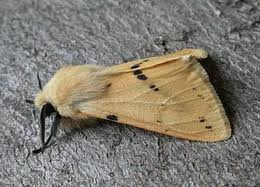
Buff ermine Spilosoma luteum,  in the picture  and Silver Y Autographa pulchrina,

Buff ermine Spilosoma luteum


Angle shades Phlogophora meticulosa, and on the   right The Spectacle Abrostola triplasia,

angle shades Phylogophora meticulosathe Spectacle Abrostola triplasia


Beautiful Golden Y Autographa pulchrina,

Beautiful Golden Y Autographa pulchrina

Nettle Top moth Anthophila   fabricana and the Mother of Pearl moth Pleuroptya ruralis  pictured below(Davis 1991).

Mother of Pearl moth Pleuroptya ruralis


(These images were produced by   the British Moth Project, FLIKR and various universities Thank-you for   letting me use these images)

The larvae of all of these   species have been reported feeding on nettle foliage. In addition spiders,   harvestmen, woodlice and snails feed on nettle plants.

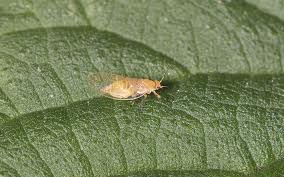
Jumping Plant Lice Trioza urticae use the nettle to lay theirs   eggs, where they create a gall (an abnormal growth produced by the plant or   other host which causes an enlargement on the plant that provides food and   shelter for the host.)

Jumping Plant Lice

jumping plant lice

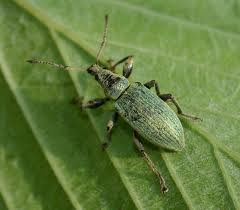
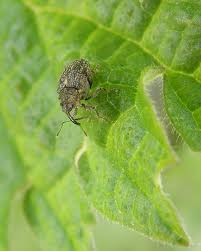
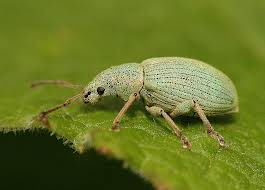
Some insects like the Nettle Weevil Phyllobius pomaceus, the   Small Nettle Weevil Cidnorhinus quadrimaculatus, the Small Green   Nettle Weevil Phyllobius roboretanus and the Green Nettle Weevil Phyollobius   viridaeris only live in nettle patches.

From left to right The Nettle Weevil, Small Nettle Weevil

nettle weevilsmall nettle weevil

The small Green Nettle Weevil  pictured below and Green Nettle Weevil

untitledsmall green nettle weevil

Nettle Aphids Microolophium carnosum and Aphis urticata   also live on nettles where ladybirds go to feed on them. Ants can be found   protecting and herding aphids for the sweet nectar they secrete. Leaf-Mining   Flies Agromyza anthracina; Agromyza pseudoreptans and Agromyza   reptans use nettles for food by burrowing between the leaves.

Nettle Aphids  Aphis urticata

nettle aphids


Many birds like the coal tit, blue tit, siskin, reed bunting and   bullfinch are attracted to nettles for the seeds and insects.

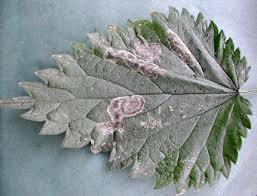
The work of the Nettle Leaf Miner

nettle leaf miner

History of the uses of Nettles

History of the uses of nettles

Fabric woven of nettle fibre has been found in burial sites dating back to the Bronze age. A Bronze Age (2200 – 700 BCE) body was discovered in Denmark wrapped in cloth made from nettles.

Ancient Fabric from Denmark made of Nettles

ancient nettle cloth

Human settlements that have long since been abandoned can be spotted by archaeologists as nettles still grow there.
Nettles at Danehill Fort

nettles at Danehill fort

The plant is listed as one of the Anglo Saxon nine sacred herbs. Samuel Pepys enjoyed nettle porridge on 25th February 1661 and Sir Walter Scott wrote about the gardener in Rob Roy raising nettles for use as early spring kale (Mabey 2010).

The Romans are said to have brought Urtica pilulifera to Britain where they used them to relieve rheumatism and arthritis by flogging themselves with small branches of them tied together, this stimulates the blood. They also used them to keep out the cold of the damp British climate. However this species of nettle is not common in the United Kingdom.
Urtica pilulifera

Urtica pilulifera

Nettles Urtica dioica have been used to make cloth, paper, fishing nets, sails, tablecloths, ropes and textiles since the Neolithic times. The German army used nettle for their uniforms in World War 1 However it took 40kg of nettles to make a single shirt. In the Second World War the leaves were used to make the green dye for the military uniforms.  Today nettles are again being used to make cloth as they are Eco-friendly and easy to grow. The tough fibres from the stem are used to make the cloth. It is reported that it is stronger than cotton and finer than hemp. People used to sleep between the sheets made from nettles.

Nettle Cloth

nettle fabric

 Nettles can also be used to make paper, however the process is complicated

Nettle Paper

nettle paper

There are records of nettle fibres being spun into ropes.

Nettle Rope

 The roots can also be made into a dye that is yellow (Mabey 1977).
The chlorophyll is used as a green dye and is listed as a food colorant (E140) by the European Community.

Spring bulbs and a walk in the park

Today was a very foggy day the mist didn’t clear until lunchtime. We couldn’t see across the valley from the bedrooms. I love the dislocation that comes from fog the way that sounds are dissociated from their origin and the restricted vision that caused objects and people to loom out of the mist close at hand like a Dr Who villain.

So with this in mind we went to the park for a walk. I took great delight in the Autumn colours. anthocyanins and carotins are spendid. There were enough leaves to kick through like a child.

We saw most of the urban ducks we would expect in a park. Mallard, Tufteds, Pochard, Wigeon, Shovelers and lots of Gadwell. Moorhens, coot and blackheaded gulls were abundant. In the trees flocks of mixed tits Blue, Great and Long Tiled movedr though with flocks of Finches Goldfinches and Cheffinches. at one point a Nuthatch appeared and jackdaws had obviously opted for a lie in as they were still everywhere instead of dispersing as they normally do at first light.
We found a wounded fallow deer stag one eye closed, its muzzle swollen and a truly weary expression on its face. We gave it a wide berth as we hoped it would recover. I suspect it had been rutting and been wounded in a battle with another stag.
As we arrived home the mist finally dispersed and we had a lovely sunny warm autumn day. I indulged myself in one of my favourite pastimes at this time of the year, I plant spring bulbs. Something about small bulb shoots emerging in early spring gives me such a happy feeling as it spring is on the way and the world is still working. We now have numerous tubs containing Red Riding Hood tulips, Daffodils, bulb irises and Muscari.
a lovely Sunday and worth remembering hence this entry.

autumn fruits

This week at work someone gave me a huge bag of cooking apples. A  very welcome gift as our trees haven’t produced much fruit at all this year. So this morning we started to make chutney

The difficult part is mincing the onions as we all end up in tears. In addition minced sultanas and apples look distinctively unappetising. However one we had weighed the fruit minced it and measured out the sugar and vinegar we just have to stir the mixture occasionally and heat it slowly until all the ingredients combine into a thick rich chutney. Meanwhile the house smells of vinegar and onions and apples and sugar a real smell of autumn. Once the process is complete the mixture will be spooned into sterile Kilner jars and sealed and will last us all year with a pot being given to the colleague who supplied the apples.

Here is the recipe if you are interested

1.5 kilograms of apples peeled and diced (or minced) 3lbs

1.5 kilograms of onions peeled and diced ( or minced) 3lbs

0.5 kilograms of raisins finely chopped or minced (1lb)

the juice and grated rind of 2 lemons

700g of demerara sugar (1.5 lbs)

600ml of vinegar ( 1 pint)

Place the ingredients into a pan and bring the pan to the boil. Simmer the mixture until the ingredients combine into a thick brown consistency without excess liquid. Sterilise the jars by either heating them in the oven or by pouring boiling water into them. Sterilise the rubber seals as well. Our chutney keeps for over a year (if I can stop the family from scoffing it sooner)

It doesn’t look very appetising being sludgy brown in spite of this the smell is wonderful and the taste is light and fruity without too much spice. It goes well with cheese, poultry and pork.

A wet day in Norfolk

We woke to the sound of the wind driving rain against the windows. Although some birders are brave enough to venture out in such conditions I find getting cold and wet unpleasant and I find my optics don’t work well in heavy rain. After a disasterous day on South Stacks some years back, the details of which I have tried to block out of my memory I try to avoid seriously bad weather. Anyway several games of scrabble and cards later, we decided we needed a bit of a drive and some fresh air so we went for a drive to Wolferton triangle which is next to Dersingham Bog. We Drove round in a desultory fashion looking for Golden Phesant which we had seen there before but not for a few years. We found a field near Friar Marcus Stud where there were a number of birds a couple of Grey Partridge another species I had not seen this year, Phesants, a Golden Plover in summer plummage and about 30 each of Fieldfare and Redwings. A male Ring Ouzel was hopping amongst them as were any number of rabbits. Two in two days is rather special.  In the trees we found a Roe Deer. We called in to be blown along the beach at Hunstanton the redeeming features were Fulmars on their nest and sanderling along the beach and a hare we spotted running through a field.

Still another species for the year and 25 species of bird seen total 137

birdwatching Sheringham Cley and lady Anne’s Drive Holkham

We decided to make use of the dry weather whilst it lasted and therefore we were out bright and early Before we had left the flat we had seen a Greater Spotted woodpecker in the garden and 4 Jays. There was also a Black Phesant probably just a colour morph but very distinctive. We headed for a walk at the end of Lady Annes Drive and were there by 8 am. On the lake by the path were a pair of Little Grebes calling to each other. A spoonbill flew over us and on the marshes a mottley collection of geese consisting of Greylags, Canadas, a pair of Egyptian Geese together with a Mute Swan were busily feeding. In the field beside the drive were Wigeon and Teal both quite close to us and very colourful. A male Ring Ouzel was feeding with the blackbirds at the end of the drive. This was a lovely surprise as it is a few years since I had seen one of these birds. Early migrants were everywhere, Chiffchaffs appeared to sing from every possible bush or small tree Robins, Wrens, Dunnocks. Blue Tits, Great Tits, Chaffinches, Goldfinches, Greenfinches and Long Tailed Tits were abundant.  A Goldcrest darted about an ivy covered tree. A stoat ran in front of the hide whilst we were sat there and a muntjac was seen lurking in the hedgerow. As we made our way back to the car a Red Kite flew over us and we managed to see a total of 4 Marsh Harriers some came very close to the hide.

Having started the day and just seen a Sparrowhawk  fly in front of us, we pressed on towards Cley nature reserve where we immediately saw Brent Geese feeding on the marsh. Two Spoonbills were engrossed in sleeping on a lagoon in front of North hide. We found two bright male Pintail ducks. We also picked up Shoveler, Pochard, Mallard, Gadwell and Tufted Ducks. We found 4 adult Mediterranean Gulls on lagoons in the centre of the reserve. Outside on the boardwalk we stopped and waited and found serveral Bearded Tits and heard a Cetti’s Warbler.

Our waders included Oystercatchers, Avocets, Golden Plover 3 summer plummage adults were on the eye field with a group of Lapwing, a Snipe was lurking in the edge of the reeds whilst Black Godwits, Redshank and Curlew fed in the ditches. On the sea we saw small groups of Sandwich Terns passing through. On the Eyefield we found 2 Wheatears a sure sign of spring alongside some Linnets and Meadow Pipits. Suitably refreshed and happy we drove on towards Sheringham for a bit of seawatching.  On the front were crowds of people with picnics and ice creams and cycles, scooters, pushchairs. nevertheless we settled down to watch and soon saw a few Turnstones amongst the rocks  we had picked out most of the common gull species  ( Black Headed, Herring, Common, Lesser black Backed and Greater Black Backes and were just getting weary when another star bird a first winter Glaucous Gull can close to the shore and settled on the sea where we could all easily see it. The colour of a milky cappuchino with streaks it was another lovely surprise. So another successful day with  77 species of bird seen and 6 new species seen for the year making the total at 136.

Birdwatching in Norfolk Titchwell and Hunstanton 2nd April 2012

It was a chilly morning as we breakfasted, loaded up the car and set out for Norfolk. It had an ominous sky that promised rain and we were suitably sober as a result. Birding in heavy rain is a miserable experience. However, by the time we had reached Norfolk, pausing at The Farm Shop for tea and stickies, the weather though still cold, looked decidedly more promising. On the way we had seen most of the Corvids Carrion Crows, Rooks, Jackdaws, Magpies most of the pigeons and several hares.

I have noticed that often although it is raining and wet inland it can be quite bright and sunny on this coast. We were not due to arrive at the flat we had rented till late afternoon se we had the day to amuse ourselves. we therefore started at Titchwell RSPB site of much of our birdwatching on this coast. We found several Marsh Harriers in the air before we had left the car park. They were joined by a Red Kite and a Buzzard a common one but where can you see three species of raptor in the visitor car park?

On the bird feeders we found the usual suspects Long Tailed Tits,Blue Tits, Great Tits,  many Chaffinches,  Greenfinch and Goldfinch and abundant House Sparrows. On the reed beds we saw a number of Reed Buntings and Linnets flew over our heads and settled on the salt marsh. In the trees around the visitors centre there were a number of Chiff Chaff singing loudly, several Dunnocks were lurking in the vegetation, a blackbird was turning over leaf litter looking for food and a songthrush was seen on a shrub. A Robin was giving star performances by taking food from the visitors, whereas a wren just chided us for getting too close.

The hide in the reed beds was very quiet indeed the whole reserve was very quiet in terms of visitors. We heard Bearded Tits but we only caught a glimpse of them flying. We found a male Blackcap in the woodland near the centre and a Cetti’s warbler sang from just outside the reed bed hide.  A phesant called from the reeds somewhere.

On the water we found Mute Swan,  Shellduck, Egyptian Geese, Canada Geese, Tufted Ducks, male and female Gadwell, Widgeon and Teal, Shoveler and Pochard. A lovely surprise was a pair of Red Crested Pochard on the Freshwater lagoon. An elusive male Goldeneye kept disppearing as he dived for food at the back of the lagoon and several females were also found. We found a rather sulky Grey Heron fishing in the reeds. On the marsh a Little Egret was conspicuous as only a white bird on a salt marsh can be. Oystercatchers were making amorous advances on the salt marsh and a Kestrel just hung in the air above the reeds.  Skylarks were displaying over the marsh a group of approximately 30 Brent Geese lingered obviously not that eager to fly to their breeding grounds.

As for waders we found Avocets displaying, Ringed Plovers, 10 Grey Plover, Lapwings, 10 to 15 Ruff a group of 10 Dunlin, Redshank. A Curlew flew over and a snipe was found trying to hide amongst some vegetation on the freshwater lagoon. the tide was high so there were about 30 Black Tailed Godwits roosting on a muddy island in the lagoon.

A large group of gulls contained Black Headed Gulls, Common gulls herring Gulls and Lesser Black backed Gulls

All of this whetted our appetite for when we arrived atthe beach. We met a bired who assured us that nothing was on the water. Thankfully he was mistaken,  we found 3 Scoter species and though we waited for an age to see them move so that we could determine if they were the velvet Scoter that had been reported no luck so they were just down as Scoter sp. Just out from the beach a line of 9 ducks gave us excellent views and turned out to be Long Tailed Ducks, a drake was amongst them we could distinguish their facial markings.  On the beach sanderlings were running towards the sea and back again like some sort of wind up toy, Turnstones were also busy on the beach. A couple of Blackheaded Gulls kept coming closer and closer to us in the hope of some food probably. We found great Crested Grebes on the sea. On the return walk we noted a number of Meadow Pipits and a flock of Linnets that flew between the salt marsh and the brackish lagoon. After another hot drink and snack we decided to go for a walk at Hunstanton. the weather was becoming decidedly colder and windy. we walked along the base of the cliffs finding Fulmars on their nests and several Stock doves freezing hiding in crevices on the cliffs. A common seal watched us for a while from just off the beach and we found a pair of Red Breasted Mergansers on the sea. It was starting to rain so we headed for the digs. Around the flat were quite a few rabbits. Finally in the tree near to the house we found a Willow Tit. we had seen 75 seperate species of bird and 3 species that I hadn’t yet seen in 2012 an excellent start to the holiday.