American widgeon and little ringed plover

IMAG0691

This Saturday was forecast as heavy winds and rain showers. When we awoke it was raining heavily the water running down the window panes and the sky a uniform grey.

We celebrated the beginning of our holiday with a cup of tea in bed. Cora came to join us and insisted on lying on top of your father thus rendering him unable to move. After doing some housework we both went to the library me to write and him to work on his laptop. By the time we left the weather was bright if blustery sunshine. We called at Birds for buns and a cake, and, after a salad lunch,decided to venture to Holme Pierrepont to look for the American Widgeon on the A52 pit.  Leaving the house David saw a buff tailed bumblebee Bombus terrestris. I thought I saw a common carder bee Bombus pascorum on the rosemary plant, however it flew off before I could get a definitive view. Your father alledges it is too early for this species and claims it was probably the gloriously named hairy footed flower bee. We pulled up on the verge and set up telescopes we were the only birders there. Last time we were there, a pair of long tailed tits were building a nest, now the nest is finished, a carefully constructed ball of moss and lichen. It is wonderfully camouflaged to look like trapped debris in the fork of a bush, unless you look closer, when the small aperture at the top marks it out as a nest.

The main pond was quite turbulent; consequently most of the water birds were in the calmer bay. Two little egrets were beside the bank on the opposite shore.  A ruff was busy searching the grass for invertebrates. On the water great crested grebes, all now in summer plumage, swam and dived for fish, whilst moorhens and coots chugged up and down carrying trails of weeds in their bills. Tufted ducks in the centre of the pond had their crests blown forward over their heads or blown vertical, giving them a punk appearance.

On the grass nearly a hundred widgeon were grazing. We commenced scanning them for the alien widgeon. This was not as easy as it sounds. Widgeon feed with their heads down in the grass and their bottoms in the air and this flock were feeding for dear life. Presumably their aim was to fatten up ready for the flight north to the breeding grounds. The distinguishing feature of the American Widgeon is a white blaze down the centre of the forehead instead of a cream patch and a dark greenish patch on the side of its head. The flank is a slightly different colour being more russet and less plum that the other wigeon but the colour discernment is somewhat subjective. The white and black delineation before the tail is very pronounced. However yet again widgeon possess the same characteristic, so it is not that obvious amongst a hundred other birds. These characteristics are hard to discern when all you can see of the bird is its bottom in the air. Added to these problems widgeon don’t exactly feed in a straight line but rather a clump and they tend to move to a better looking bit of grass constantly.

Every so often, for no discernable reason whatever, they have a tendency to take off en masse and land on the water. Here they undertake a little feather maintenance and have a drink, before making their way to the shore to clamber out in a rather ungainly fashion, their short legs are not designed for clambering up muddy banks. I sympathise having the same problem, however I digress.


To summarise we were looking for a slightly different widgeon amongst a group of a hundred or so other nearly identical birds all waddling about and feeding with their bottoms in the air, whilst the characteristics that would identify the rare bird for us are located on the head of said bird. It took us a good twenty minutes to find the bird. With this we were greatly assisted when a commoner widgeon, possibly jealous of all the attention that its American counterpart had received, pecked the bottom of the rarer American widgeon. The bird shot its head up in outrage and promptly waddled off to a different portion of the field, thankfully at the front of the flock, where we could watch it feeding undisturbed. A redshank moved amongst the flock of ducks, searching in the wet grassland with its beak.
??????????

Having had really close views and discussed the merits of the bird we headed for Attenborough suitably impressed. We had a look in the centre which is ten years old. There was a range of photos David Attenborough was prominent amongst them, he had a lovely face.

IMAG0500

Anyway the sand martin hide and rear of the centre was closed off due to the high winds, so we made our way to the wheatear field. Despite the gusts of winds and cold, a Cetti’s warbler was singing from the reed bed next to the nature centre. The two male red crested pochards we had viewed last time we visited, have been joined by two female birds.

IMAG0722

The usual swans, geese and ducks including the common  daffyus hybrids and an extremely ugly Muscovy sitting on the path were also present.

IMAG0733

In the middle of the wheatear field was a little ringed plover, in pristine plumage, showing very clearly. We set up telescopes and viewed it for a at least 20 minutes, noticing the flesh coloured legs, golden eye ring and white patch above the bill. As the weather worsened, the bird merely hunkered down against the vegetation. This cannot have afforded it much protection against the elements.

little ringer plover attenborough

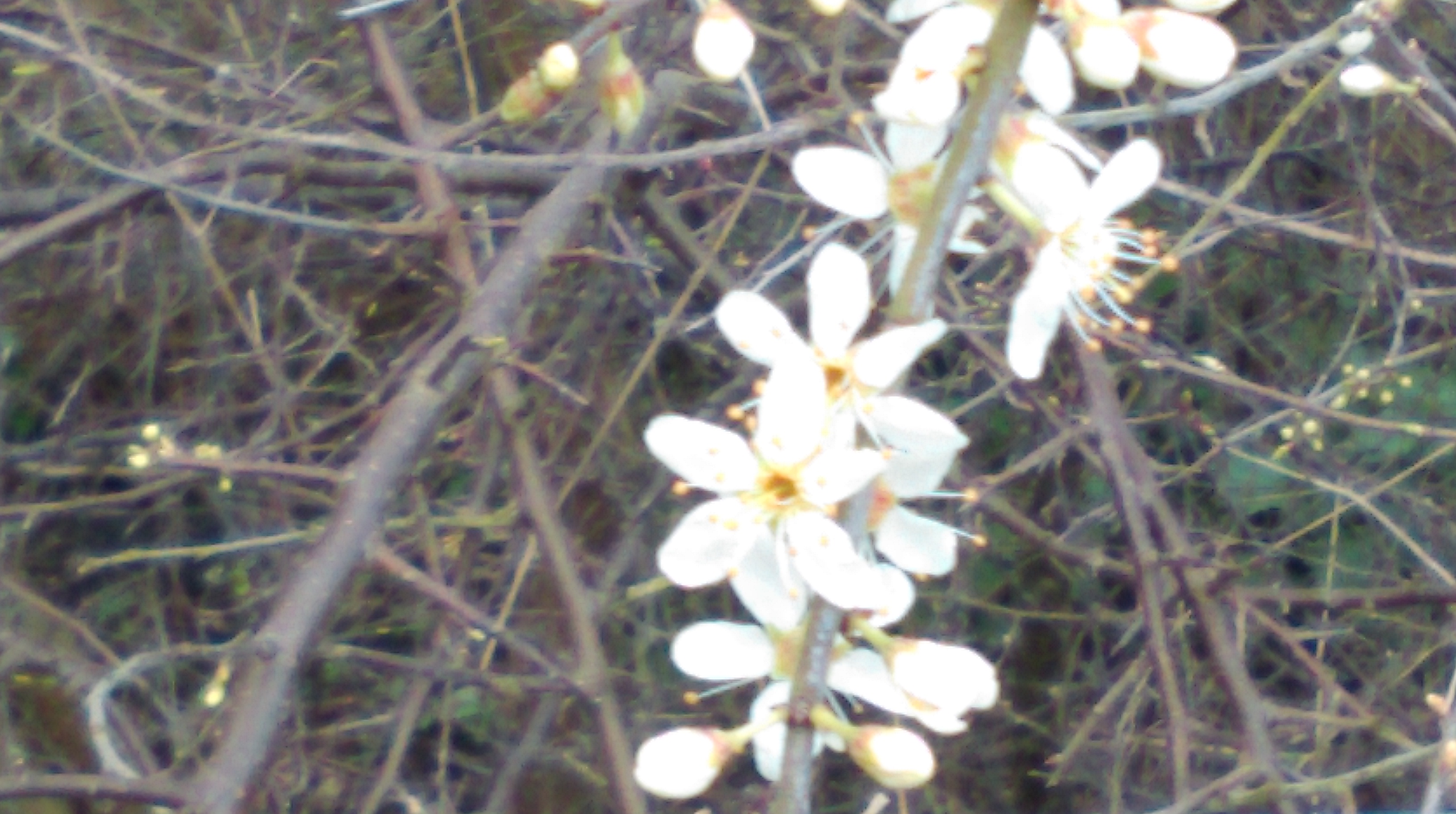
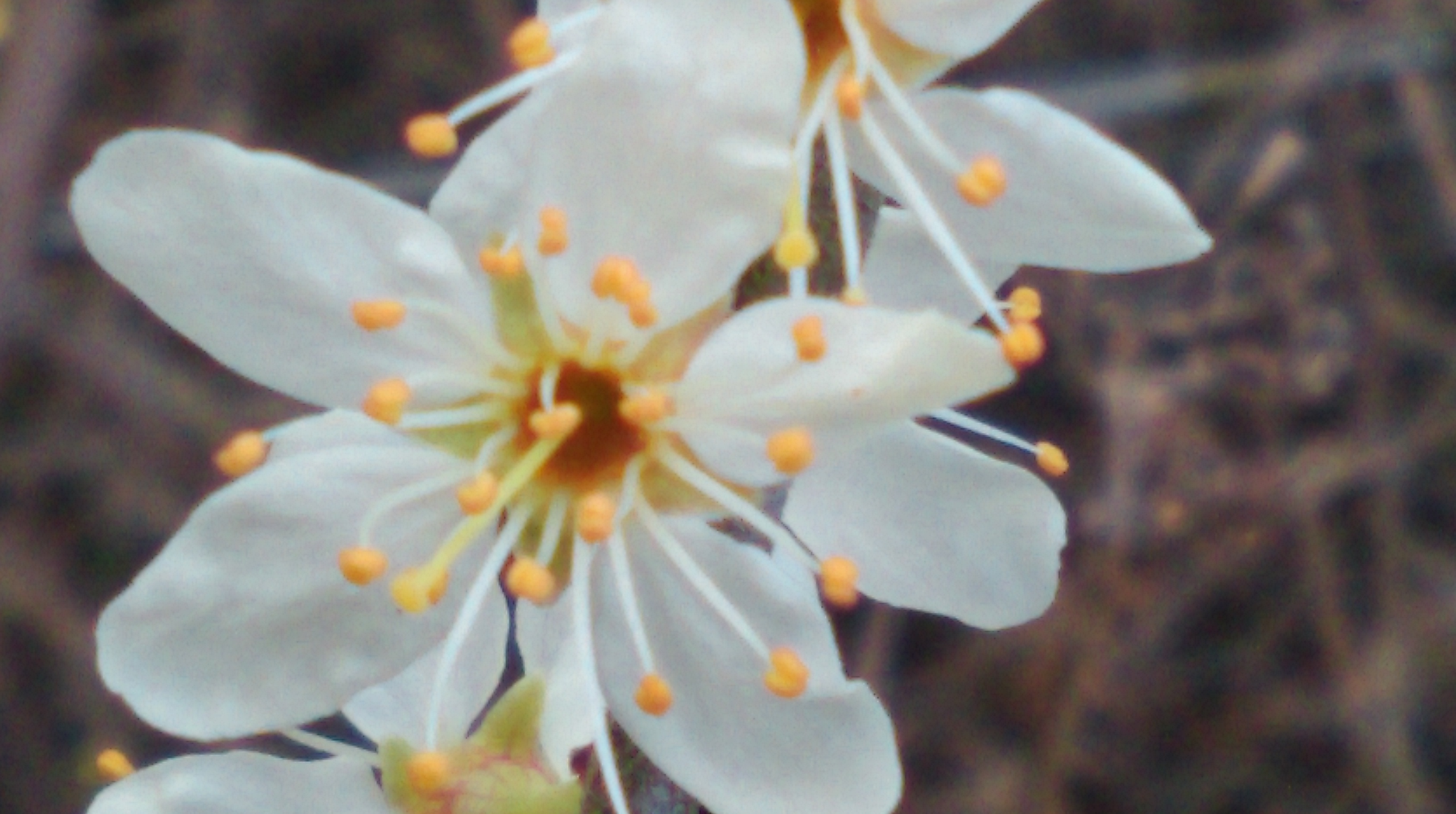
We shared our view with others, as we were watching a buzzard flew over tween pond causing us to gaze skywards in time to observe three sand martins swerving across the darkening sky before disappearing from view behind a line of willows. I wanted to check my prediction that the blackthorn (sloes) were in blossom and I was correct. I took some photos for you from my phone.
IMAG0694

The clouds grew increasingly black and the wind speed accelerated, therefore not wishing to get our equipment wet we headed back to the car park.

IMAG0701

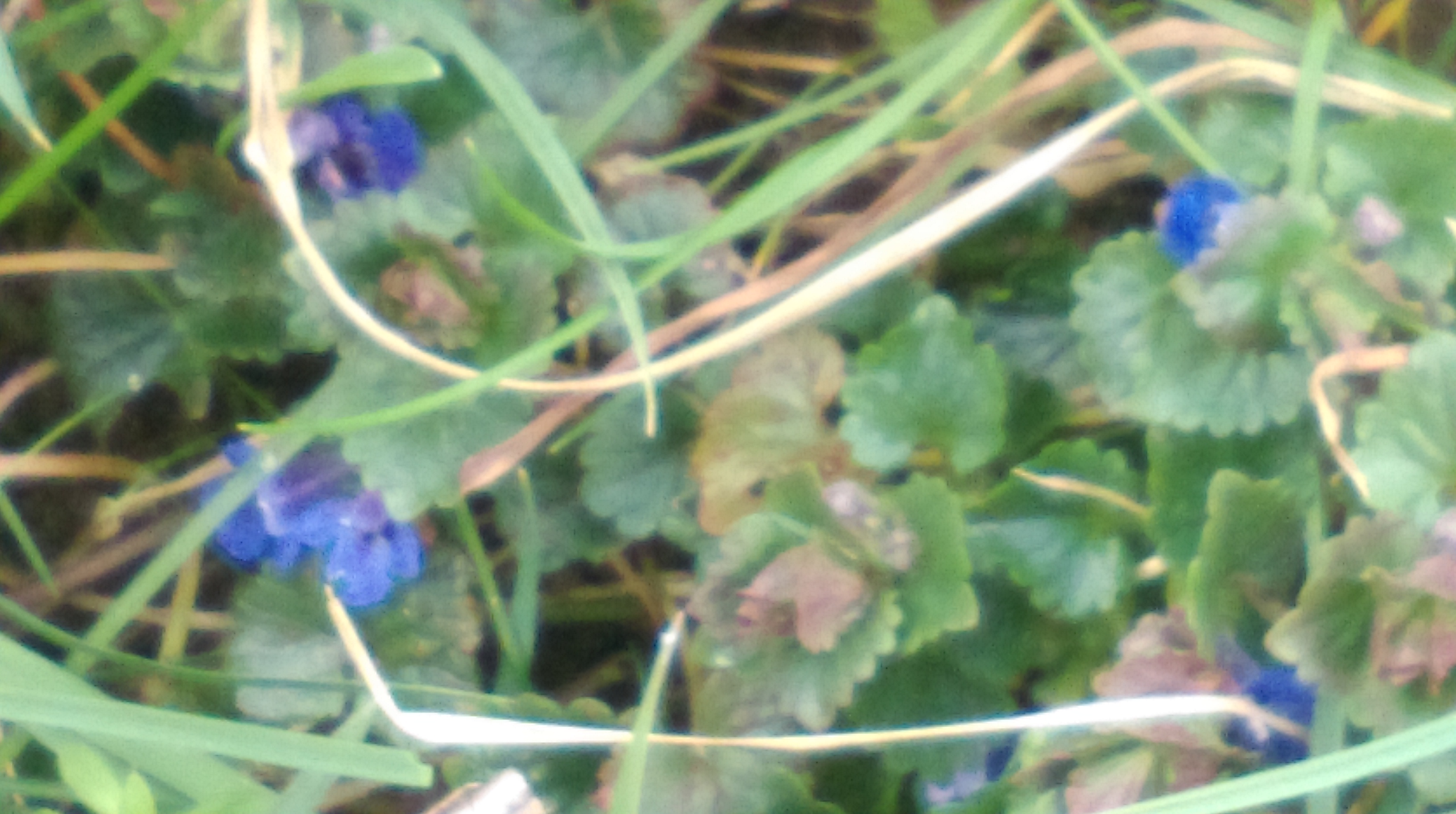
I found white dead nettle, ground ivy and dandelion in flower. I photographed them for you.

IMAG0712

IMAG0705

IMAG0713

In the garden the daffodils are in flower, the hyacinths are also blooming as is the muscari and spring squill. The hellebores are magnificent and the tulips are in bud. The buds on the pear tree are breaking and I am hoping that you will be home in time to enjoy them later this week.

 Since Saturday the weather has been very wet and windy keeping us busy indoors. I went on a quilting workshop on Sunday and visited a friend today. I am hoping the weather improves for your visit so we can have some walks and the odd trip out Looking forward to seeing you

All my love

Your mother


Attenborough 1st April 2012

On the First of April, with a weeks holiday before us we started birdwatching with a new zeal. The day was sunny and clear if a little breezy, the previous week had been very hot and sunny and we had all chafed at the restrictions imposed by earning a living. Even though it was not yet 10am the car park was very full indicating how popular this reserve has become.

By the visitors centre we had soon notched up the usual quote of ducks and geese. Great Crested Grebes are present here in such large numbers that it has become a notable site for these birds. Coot were already on a nest by the visitors centre. Cormorants are also present in large numbers drawn by the fish and disliked by the fishermen for the same reason. Grey herons used to nest in large numbers in the woods on the opposite bank of the river Trent but many have now moved to nest near to Attenborough village and they nest earlier than many species. Greylag and Canada geese were plentiful and several pairs of Egyptian geese originally introduced as ornamental wildfowl and now a feral self sustaining population. A pair of Red Crested Pochard swam around the visitors centre looking for any free handouts of food. I feel somewhat suspicious of the genuine wild status of a bird that comes to collect custard cream biscuits from the hand, consequently this pair are definitely suspect, despite having bred here for several years.  Oh and just to round off this motley crew, a cape shellduck stood sunning itself beside the visitors centre. Call me suspicious, but the thought that this plump well fed and apparently tame bird had flown thousands of miles is rather too difficult to believe and it was noted as an escapee. Alongside all these were the usual range of interbred ducks and geese some definitely with a great deal of farmyard in their phenotype.

On Clifton pond Wigeon, Gadwell, Teal, Mallard, Shoveler, Pochard, Tufted Duck and Goldeneye were busily feeding. This is an excellent assemblage of species for this time of the year especially after such gloriuos weather the previous week. A pair of Ruddy Ducks were swimming at the back of the pond. Ruddy Ducks have been hunted to ‘protect’ the White Headed Duck with whom they can interbreed, justified on the basis that the Ruddy Duck is a North American bird. A bit of distasteful avian ethnic cleansing  that has reduced Ruddy Duck numbers over the last few years. However I love seeing them as it supports my subversive sense of humour, good for you I think. A Buzzard flew from the woods at Barton in Fabis and all the seagulls flew up to defend their patches. A Kestrel was hunting over the field and pheasants were calling. The usual assortment of Blue Tits, Great Tits, Dunnocks and Chaffinches were busy on the feeders alongside the resident Tree Sparrows. A pair of Oystercatchers were on one of the Islands but apart from the Lapwings and a solitary Snipe these were the only waders we saw. Waders are rather few in this part of the county.

We decided to move on and head for Tower hide.  Beside the path a number of short trees, Hawthorn, Blackthorn and Elder had been planted and as we got to Tower hide we found a very unusual small warbler at the base of one of these shrubby trees. We watched it for a few moments before deciding this was a Cetti’s Warbler, which was confirmed when we heard the bird sing. Such an volume from this tiny bird is amazing. Chiff Chaffs were everywhere and later we found a male Blackcap also very vocal. At the edge of the pond are posts which were used to fence off the reedbed so the geese would not eat the young reeds before they could become established. On one of this posts sat a Common Tern another new species for the year. At the end of this path is a sunny spot loved by a number of butterfly species, so it was that we headed there after Tower hide. We saw more Reed Buntings than one might usually see all year. The pair of Long Tailed Tits were busy nest building, Greenfinches were singing from the tops of the trees and we saw several species of butterfly. Brimstones the first butterflies of the year were present, Orange Tip males were about, Peacocks and Small Tortoiseshells were abundant and a pristine Speckled Wood butterfly came through. We all managed to find a Comma butterfly at some point during the day.  Beside the path from the Tower hide to main pond there were a number of plants flowering that normally do not flower simultaneously. We saw Coltsfoot an early spring flower and White Violets, but we also saw Pink Campion which usually flowers later and Ground Ivy was everywhere, Lesser Celandines were very conspicuous and as usual Dandelions were capitalising on the warm weather .

We walked beside the River to the Bund and then came all the way back as the path though the village was closed not that there was any notification until we actually went to use this path. The last encounter we had was of a female Scaup on church pond looking very like a Tufted Duck but with the characteristic white patch above the bill and a less distinctive break between the colours on the body, when seen next to a female tufted it is glaringly obvious.

We saw more of the same species and heard a Willow Warbler.  Although we missed the Bittern that we discovered had been seen earlier in the day and a Curlew we had seen 54 species and I had now seen 129 species this year. We had also spent 4 hours walking a distance we could have covered in an hour. To anyone who does not understand the attraction of birdwatching it is so hard to explain. Time ceases to matter, we are fully associated, we reside in the moment without the worry of work, chores or conscience. There is always the uncertainty of what will we find today and the search for  an encounter sometimes we see very little sometimes an unexpected delight,  a particular long encounter, or a previously unobserved behaviour. If there is little to see there are always plants, lichens and things that don’t run or fly away.

Insects such as butterflies and dragonflies are even more elusive. they live as adults for only a short time. A cold spell or a rainy summer can severely reduce numbers. There are reluctant to fly unless it is sunny and some are confined to specific areas of the country. In addition we have to earn a living, so we are not available except at weekends. These are severe constraints on any encounter. How often are our summers sunny and consistently warm? Many summer holidays have been ruined by wet cold weather and the resultant lack of dragonflies or butterflies, at least birds are still present in cold wet weather and plants stay still whilst being photographed and allow themselves to be closely examined to verify identification and note any interesting details.  On the second of April we were due to travel to Norfolk staying in Hunstanton for  five days of holiday.

I was however exhausted and worried at how unfit I appeared to be. Surely all the swimming and exercise I regularly undertook four or five times a week should have meant I was much fitter than this. It was only as the week developed that I came to realise that I was ill and the tiredness was a major symptom of this.